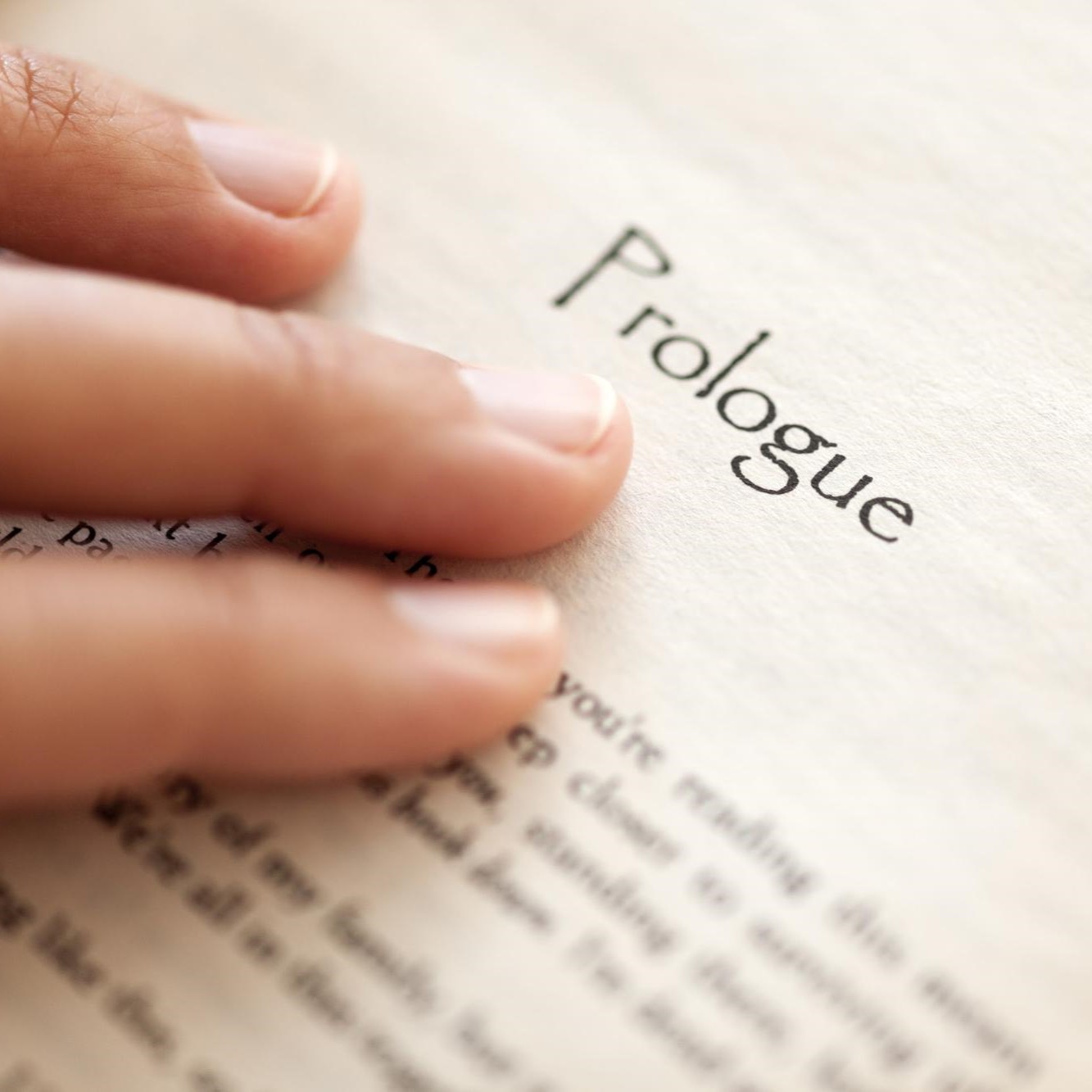
Does your story need a prologue? Here’s why it probably doesn’t.
Anyone else notice the recent disdain for prologues? Most editors advise writers against including them, as publishers often reject stories with them.
But how can that be? Prologues are awesome! Some of the best stories have them: Star Wars, Lord of the Rings, and Avatar: The Last Airbender.
Prologues can be an effective way to acclimate readers into stories with strange, fantastical settings, especially in sci-fi and fantasy. However, that’s only if prologues are written well, and…well, that’s the problem: many of them aren’t!
Too many novice writers use prologues as a shortcut for backstory and world-building, often writing infodumps that come across as trite and lazy. Many times, the info divulged in prologues can be better conveyed in the actual story.
Also, starting a story with a prologue can distance the reader from the present action, thus delaying the development of tension and intrigue.
So here’s a good rule of thumb: if the info in your prologue can be better explained in the story itself, then actually tell in in the story. Your audience doesn’t need to know everything upfront. And sometimes its better and more intriguing for the reader to have vital info slowly drip-feed into them as the story progresses.
I ran into a similar problem writing my own novel, “The Light Prince: Grail.” Originally, the story had a prologue that told the backstory to the titular Light Prince. However, I decided to scrap it as the story was actually told verbatim by another character in the book.
By the way, it’s available in paperback and e-book!
 J.C. Alexandre